
Written by Joshan Davies
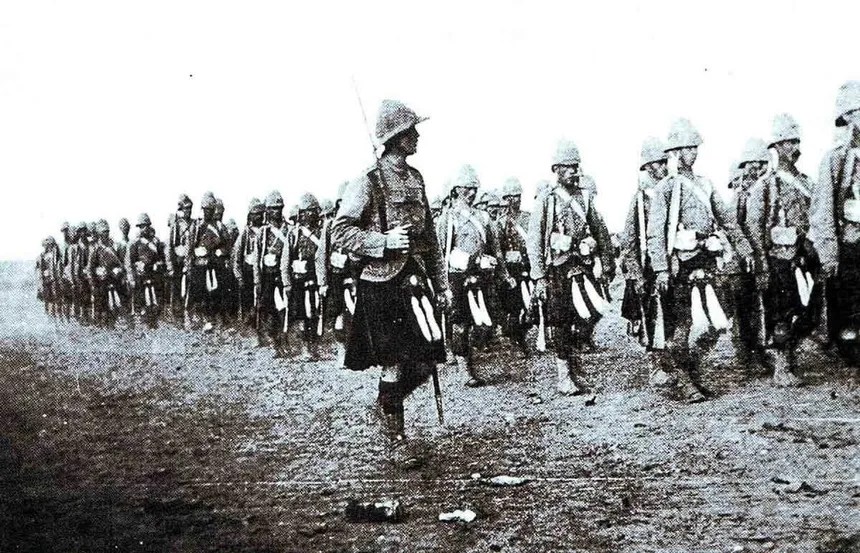
Britain has had a significant role in Sudan and subsequently South Sudan’s development. In the aftermath of the Mahdist war in 1899, Britain and Egypt reached an agreement wherein Sudan was effectively governed as a crown colony. Britain aimed to modernize Sudan by bringing European technology and liberal ideals to the country.
The colonial government of North and South Sudan was dominated by wealthy Northern individuals, enabling inequality between the two to persist; the British-led administration allocated more resources to the North, notably in the fields of education and industry. For example, Southern Sudanese students were prohibited from travelling to the North to receive education by the Closed District Order, designed to mitigate the slave trade. While Sudanese individuals in the North were being trained at institutions such as Gordon College to take up leadership roles, those in the South were only trained for minor clerical positions, with very little investment in their education.
The British also gradually expelled Arabic administrators and merchants, while discouraging Islam, in attempting to revitalise African customs. However, this only served to further cut economic ties with the North. British governmental officials in the North also resisted recommendations for the diversion of Northern resources to stimulate economic development in the South. This reinforced the inequality between North and South Sudan, leading to civil war from 1955-1972 and 1983-2005, which further contributed to South Sudan’s underdevelopment at its independence. Therefore, the under-representation of South Sudanese people in government, British lethargy to invest in the already underdeveloped South, and British governmental mismanagement, led to the divide between North and South Sudan, now expressed as their differing nationalities.
However, British policy is not wholly responsible for the divisions between North and South Sudan. Pacification in the South took longer, due to the South Sudanese people not seeing the Anglo-Egyptian force as liberators – indeed they had already liberated themselves from the Mahdist theocracy. Thus, the South was not pacified until 1930. This meant that development was largely dominated by the military and their interests at this time, with a necessary deprioritization of economic development. 9.4 million people, 76% of the population of South Sudan, were estimated to require humanitarian assistance in 2023 (OHCA). Only 45% of the population has access to clean drinking water. 1.4 million children under the age of five are acutely malnourished. There are 19,000 child soldiers in South Sudan, some as young as 10; 40% of those are girls. Furthermore, conflict in Sudan is driving thousands more into South Sudan. $1.8 billion has been requested to provide humanitarian assistance to 6 million in 2024 (OHCA). This is a crisis of shocking proportions, with severe consequences. Thus, it could be argued that Britain has an obligation to provide some of this aid to South Sudan – after all, they radically altered the path of the country’s development. Indeed, the UK has only provided $32.7 million in funding thus far to South Sudan, where there is a funding shortfall of $1 billion.
Although it is simple to identify Britain’s agency in South Sudan’s history, what action should result is less clear. With this notion of reparation for historical actions, a potential ‘Pandora’s Box’ is opened – if Britain should be held to account in this circumstance, it could be argued others should be held to account also. Drawing the line at how far into history such accountability should travel is also a contested concept, with the difficulty and potential associated bias of determining a historical action’s present-day impact leaving no clear conclusion.
In this case, I believe that the scope of the current humanitarian crisis in South Sudan commands a greater response from the UK and other developed countries, regardless of obligation. In a case where the outcome of relatively recent historical actions has played a major role in a great deal of human suffering, there is a stronger argument for this greater response than most. The contentious efficacy of aid further muddles this situation, although the absence of strong institutions in which to direct alternatives such as Foreign Direct Investment once again marks South Sudan as a strong candidate for assistance. Such assistance should, and is, undertaken with local governments playing a role to ensure their long-term utility and to avoid giving foreign countries too much responsibility and potentially control in the recipient country.
Indeed, this is one of the most significant lessons to be learned from Britain’s role in South Sudanese conflict – the solution to these problems must be in conjunction with and in the interest of the recipient countries, not what another country has judged to be optimal. We can see how this erroneous approach can have long term impacts through Britain’s colonisation of South Sudan, and perhaps this is how such cases should be used – as something to learn from, not to be held over the perpetrator’s head.
 The Cannon Yarder